Product Planning: The Costs Beyond Formulation, Packaging, and Filling
Factosquare specializes in both small- and large-batch cosmetic manufacturing. We often receive questions from clients who are building a launch budget for the first time. This article walks through the costs that tend to appear after formulation, packaging, and filling are accounted for.
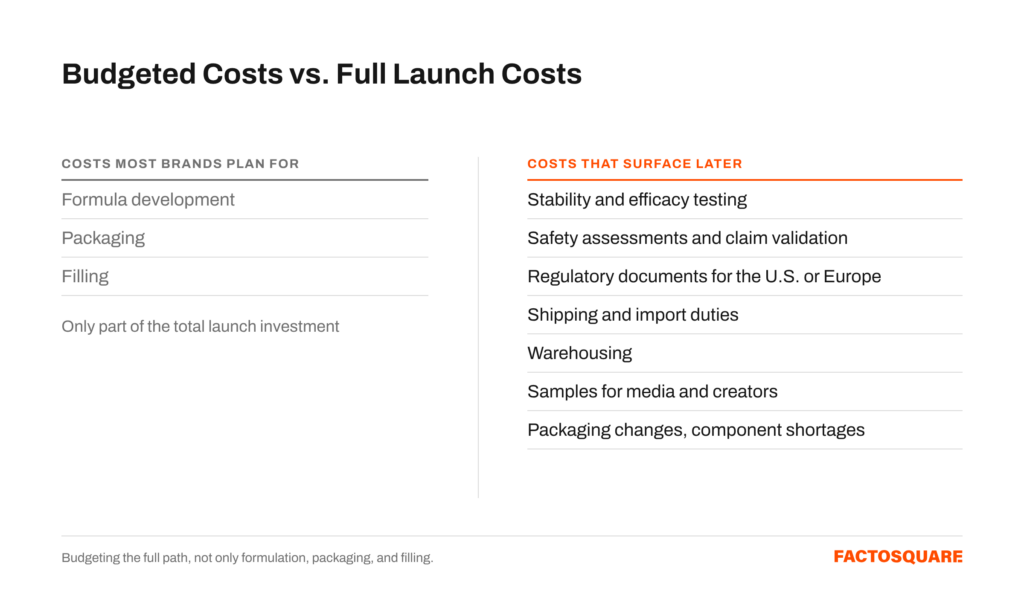
Most founders start a budget with three line items: formula development, packaging, and filling. These are the costs everyone expects, and they are important. But they cover only part of what it takes to bring a product to market. As more brands plan to sell across borders from the start, the surrounding costs have become a larger share of the total investment.
🧪 Testing and Compliance
Before a product reaches the market, brands generally need stability testing, efficacy testing, safety assessments, and claim validation. Each one adds time and cost, and the scope depends on the product type and the claims on the label.
Selling in markets such as the U.S. or Europe also calls for additional regulatory documentation. Requirements differ by country and by product category, and some ingredients or claims may be treated differently depending on the market, so it is worth confirming details with a regulatory specialist early.
📦 The Physical Costs That Hide
Shipping, import duties, and warehousing are easy to overlook when the budget is built around production. Product samples for media and creators add another line, especially for brands that rely on early visibility.
Unexpected changes can also affect the budget. A packaging revision or a component shortage may delay a schedule and raise costs at the same time.
📈 The Gap Between Sampling and Scale
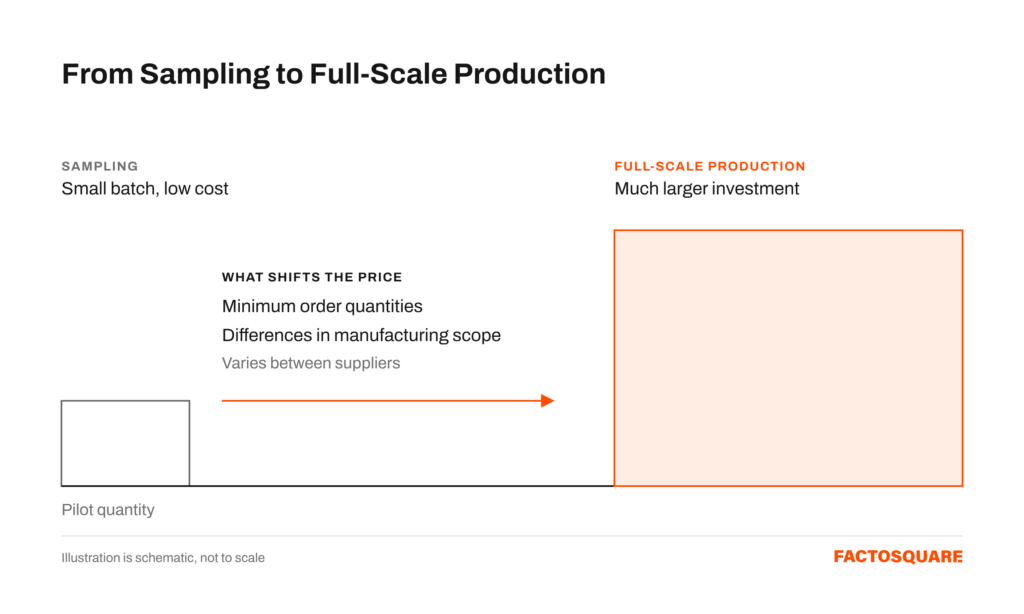
Sampling is relatively inexpensive because the quantities are small. Full-scale production requires a much larger investment, and the difference can be surprising if the budget was built on sample pricing.
Minimum order quantities (MOQs) and differences in manufacturing scope also affect pricing. Two suppliers may quote very different totals for the same product simply because they include different services or set different minimums.
❓ Q. Why does the production quote look so different from the sample cost?
A sample is a small batch made to confirm the formula and the look of the product. Production quotes reflect raw material volumes, MOQs, filling and packaging runs, and the scope of work the manufacturer covers. Asking each supplier to list what is included makes quotes much easier to compare.
📌 Tips for Product Planning
1. Map the full cost path.
List every stage from formulation to shipping, including testing, compliance, and warehousing, before committing to a launch date.

2. Ask about MOQs early.
Confirm minimums and what each quote includes, so that sample pricing does not set the wrong expectation for production.

3. Plan for contingencies.
Set aside room in the budget for packaging changes or component shortages, since these tend to appear late.
A launch budget that stops at formulation and packaging is incomplete. The biggest costs often come from everything else, and a complete budget helps prevent surprises later.
If you are planning a launch, we can help you think through formulation, stability, concentration, and packaging compatibility alongside realistic production costs. Feel free to reach out to the Factosquare team at global@factosquare.com to discuss your project. 📩
 채팅 상담
채팅 상담
 WhatsApp
 방문 상담
방문 상담